Rioja is the Spanish red most guests already know, usually as a soft, vanilla-scented wine aged a long time in oak. That wine exists and we pour it, but the region makes a wider range than its reputation suggests, and its labels are unusually honest about what is in the bottle.
Reading the label
Most Rioja is labeled by how long it aged before release, and the region’s rules set the terms:
- Joven: little or no time in barrel, fresh and fruity, made to drink young.
- Crianza: at least two years of aging, one of them in oak.
- Reserva: at least three years, one of them in oak; deeper and more savory.
- Gran reserva: at least five years, two of them in oak; traditionally made only in strong vintages.
More time in oak is not better, only different. A crianza has more fruit; a gran reserva has more leather, dried cherry and spice.
Beyond tempranillo
Tempranillo is the region’s main grape, but garnacha brings brightness, graciano brings acidity, and the white Riojas made from viura can age as gracefully as the reds. We keep one bottle of each open by the glass and change them through the year.
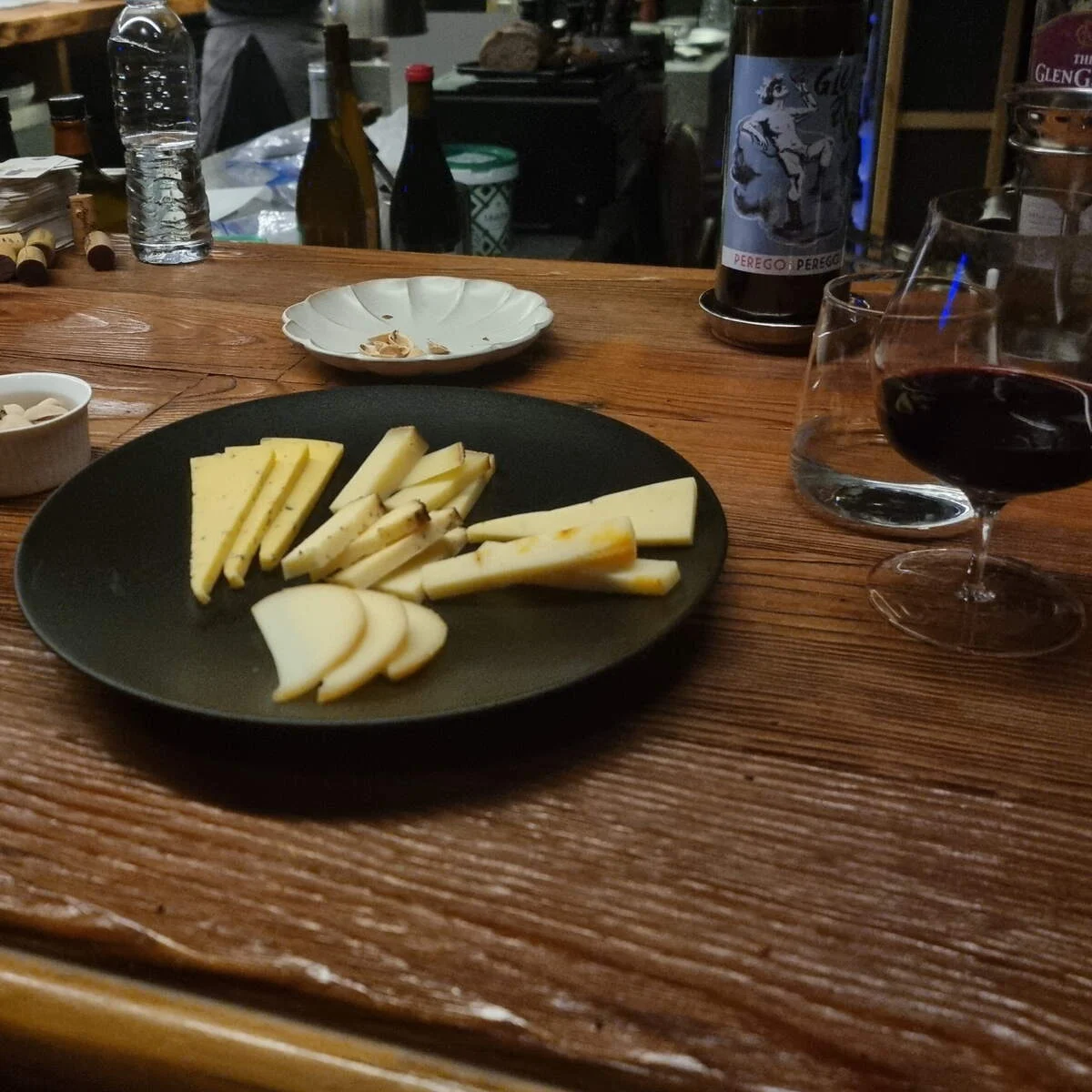
A young Rioja wants the grill. An old one wants a chair and a piece of cheese.
With food, the younger wines suit chorizo, lamb and anything charred. The older reservas are better with a board of cured cheese at the end of a meal, when there is time to notice how the glass changes as it sits.