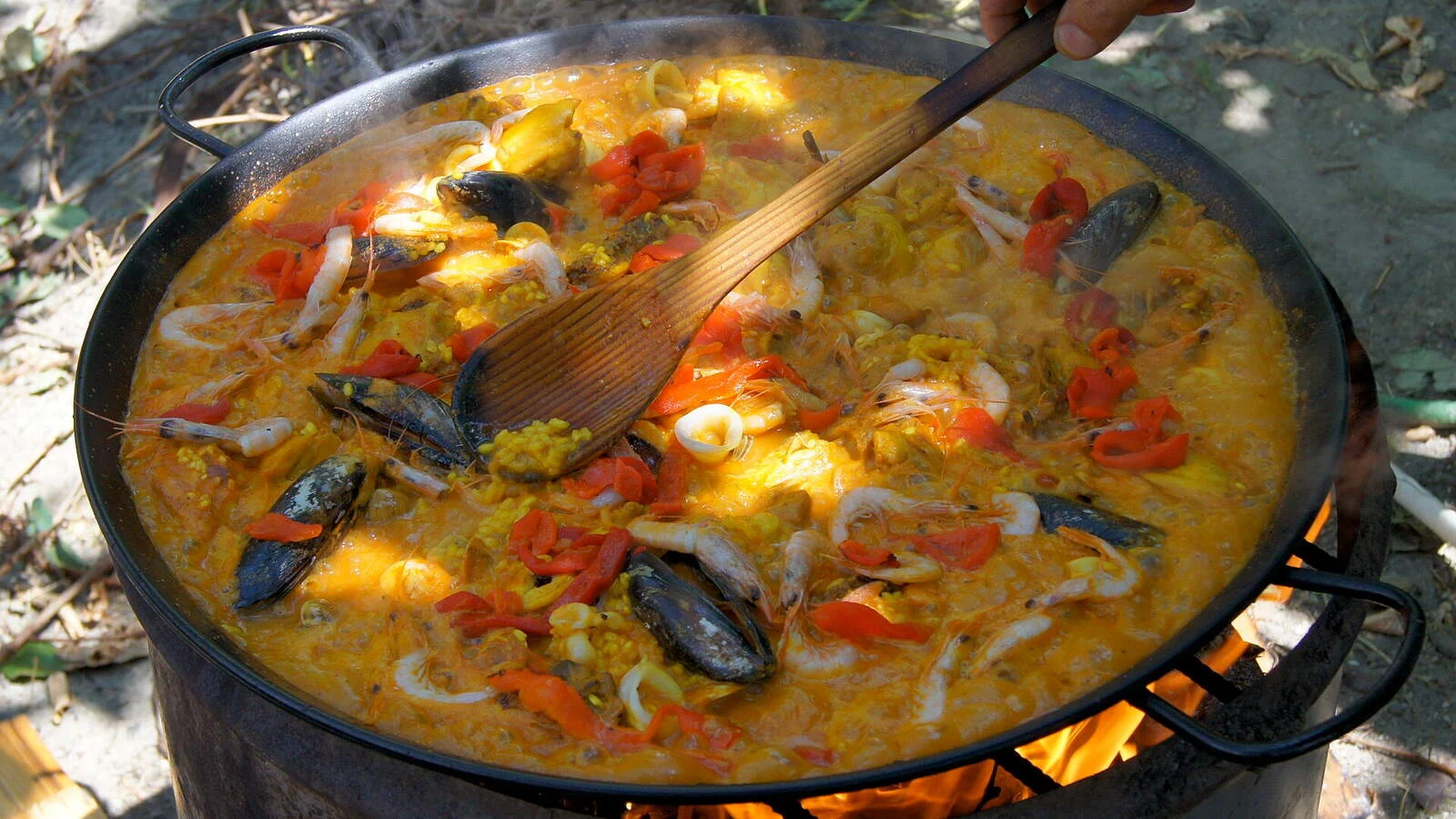
Every rice on our menu starts the same way: a wide, shallow pan set over a bed of burning wood. Gas would be easier. It lights at the turn of a knob, it holds one temperature, and it never needs feeding. We chose wood anyway, and the reasons are all in the pan.
What the fire gives
A wood fire throws heat across the whole base of the pan rather than into one ring at its center. The broth reduces evenly from edge to edge, so the grains cook at the same pace wherever they sit. The smoke matters less than people expect: a paella simmers uncovered for under twenty minutes, long enough to pick up a trace of it and no more. What you taste is the evenness.
The fire also lets the cook finish the rice properly. In the last minutes we push the embers under the pan and let the base toast. That layer of caramelized rice, the socarrat, only forms when the heat is high and even, and it is the part of the dish people scrape for.
What it asks of the cook
A fire is not a dial. Our cooks build it from split oak, let it burn down to a steady bed, and feed it a piece at a time through service. They read the flame, not a thermometer. A new cook spends weeks watching before they are trusted with a pan of their own.
You learn the fire by listening to the pan. When the bubbling turns to a crackle, the rice is telling you it is ready.
The result is a handful of rices that change a little with the season and the wood: the Valencian paella with chicken and beans, the black rice with squid and alioli, and the fideuà, which trades the rice for toasted noodles. Each one takes about forty minutes from order to table, and we would not shorten it.